Saturday, 22 October 2011

Mere Sands and Martin Mere

First trip to Mere Sands.
Female Chaffinch

Brown Rat
Brown Rat

Female Chaffinch

Female Reed Bunting

Male Bullfinch

Nuthatch


Dunnock

Tree Sparrow

Monday, 26 September 2011

Garden shots

Some garden tidying liberated a few small critters so out comes the macro again.

Green Shieldbug

Angle Shades moth

Wolf Spider

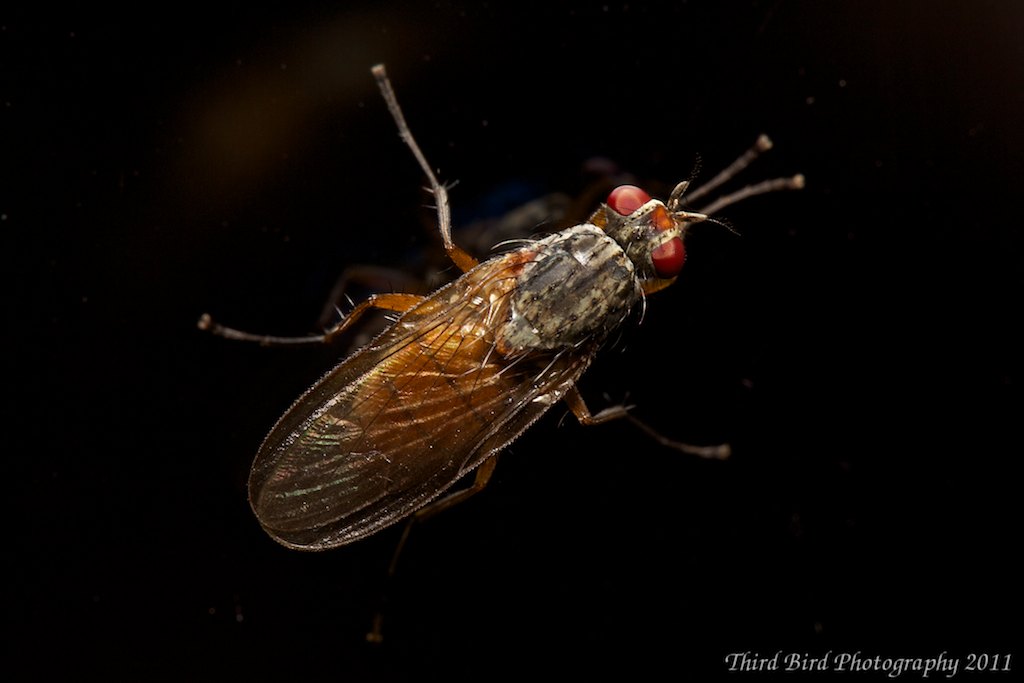
House-fly

Green Shieldbug

Tuesday, 20 September 2011

Garden shots

Another patchy day weather-wise so I snatched a few shots while it was dry in the garden. After a cool start there where still a few beasties warming up, and a few flowers still fresh with attendant insects. Craneflies are becoming numerous, although this one spent all day in the same spot.

Cranefly

Flower

Greenbottle

Greenbottle

Devil's Coach-horse

I also tried setting up the 500mm on a tripod behind some cover but after waiting for an hour nothing showed up. Feeders are definitely less popular at the moment. I later got a wood pigeon, hand-held over my head through a gap in some runner beans. A good work out!

Woodpigeon

Thursday, 15 September 2011

Canon EOS 1Dmark4

Bought as a package with the EF 500mm this is currently the top Canon sports/wildlife camera. 16.1Mpixels is a little behind the 18Mpixels of many of the other current Canon cameras, but they are 16.1 very good MPixels.

Someone coming to this camera from a P&S or Rebel background would probably think it was like trying to take a photograph with a lead brick. Luckily we've been using semi-pro bodies with battery grips for a few years and there isn't much difference in size and weight compared to eg a 50D+grip. There is certainly a refined feel to the ergonomics compared to standard sized bodies+grips and I find the 1D sits in my hands very comfortably, particularly in portrait orientation.

The first things we noticed from our previous bodies were the size of the viewfinder and lack of a control dial for setting modes.

The bigger viewfinder was certainly welcome. It gives a larger, brighter image and some increased distance between the camera body and eyecup (so you don't have to squish your nose up against the back of the camera so much). There are a few minor changes to the layout of the information overlays but nothing that takes too long to learn.

The lack of a control dial isn't a bad thing per se, it mostly means just learning a new set of buttons to choose modes and I expect it makes weather sealing the body a lot easier. Losing all of the 'creative' modes isn't a big deal either, we very rarely use them these days. The major loss is in choosing registered settings. On our 50D we can set up to two complete camera settings and switch between them with a twist of the dial (the 7D has three settings). The 1Dm4 has the ability to have an infinite number of settings registered on memory card but unfortunately it requires going into the camera menus to choose them. This takes time and takes your eye away from the viewfinder. Those few seconds can be the difference between getting a shot or not and is extremely frustrating if you're used to using C1/C2 on lower models.

The theme of extreme customisation continues throughout nearly all of the camera settings. There is an almost overwhelming range of custom settings and configurations which can take a while to get right for your shooting styles. This isn't helped by some of the settings being named differently to those found in eg the 50D or 500D, unnecessarily so IMO.

Once you've got it all configured the camera is, however, very impressive and it feels like you're fully in control of it. Bought mostly for wildlife photography the requirements are for fast and accurate focusing and high frame rates, coupled with the ability to work in low light conditions. The 1Dm4 excels at all of these.

Rattling off shots at 10fps increases your chance of getting that one good shot, although it does also increase your chance of attracting attention (both from birds and birders). We tend to use the 'slow' mode at 5ps. This is fast enough to catch most action but slow enough to take a single controlled shot. The addition of a 'silent' single shot option is welcome. It isn't truly silent but certainly a lot quieter than the quite loud normal shutter sound.

The 45 high sensitivity focus points give much more fine choice in choosing the spot you want to focus on (particularly important with shallow depth of field) and more accuracy with faster lenses. Using the rear joystick makes this a lot easier to choose, as on the 50D. There are numerous autofocus modes but generally spot works best for us, for now.

The high ISO performance, compared to our previous cameras at least, is astounding. Our 50D suffered from quite heavy noise even at ISO400 and definitely above ISO800. The 1Dm4 can give very good results even up to ISO3200, with a much more appealing noise profile. Suddenly dim days aren't quite so dim any more. The camera can also go much higher although we reserve them more for where you have no choice if you want to get the shot.

Taking both compact flash and SD cards there is a little more flexibility in the use of storage. As SD cards still tend to be slower and smaller than similar prices CF cards, we use a fast CF card for primary storage and a slower SD card as emergency backup (eg to keep shooting while swapping cards or extra space when there are no other cards). We will upgrade the SD card to something faster (45MB/s) soon which will be plenty for our usual shooting rates. We mostly shoot just RAW but you can set one card for RAW and one for JPEG. I don't see that being of much use to most bird photographers, though.

The 1.3x APS-H sensor is a compromise; both a curse and a blessing that leaves it in a photographic limbo IMO. Being larger than APS-C its gathers more light and so tends to have lower noise and shaper images, but loses some of the focal length advantage with telephoto lenses (for ultimate reach a 7D may be more appropriate).

Being smaller than full frame it makes wide angle lenses longer (less wide) and so it loses some of the field of view advantage that a full frame has but without being able to use the EF-S lenses for APS-C cameras. For our use the extra effective focal length compared to full frame is welcome but it is limiting its use for wide angle work.

I could write for pages about all the features of the 1Dm4, and we're still learning how to use some of them. The bottom line is that it's a very solid, fast, accurate, dependable, configurable camera.

Canon EF 500mm f/4.0 IS USM

The ultimate general purpose birding lens (at least until the mark 2 finally arrives) we've lusted after this lens for years and now we've finally got one. After renting one for a long week in Norfolk we just had to have it (we found it very hard going back to the Sigma zoom).


Although it is quite an old design now (first appearing in 1999) it is still optically outstanding, even compared to much newer lenses. It is this sharpness, along with the fantastic colours and contrast that made it so desirable to us. Also the fast (for such a big lens) f/4.0 aperture would allow us to work in much lower light levels than our cheaper telephoto lenses and enable the use of a teleconverter to get even more reach.

We very quickly saw a big step in quality (and reach with a 1.4x TC) after using this lens. Although it does require good long lens technique we were reasonably experienced with this after a few years of using the Sigma 150-500. Although we're still mastering the lens it's already putting many of our older shots to shame.

To help things the lens has 2-stop image stabilisation and is thankfully tripod sensing. We always have it turned on, at these high magnifications anything to keep blur down is useful. It has a low grinding noise when on, perhaps slightly louder than the Sigma, but without the loud start/stop noises.


Also on the side are more buttons alongside the usual AF/MF and IS modes. The auto focus can be limited to 4.5-10m, 10m-infinity or 4.5m-infinity. Most of the time this is left on full unless we're photographing very specific things, where it can limit focus hunting.

There is also a focus preset; if you're positioned waiting for something it's useful to have the focus preset to where you expect the subject to be, then you can go focus on other things but snap right back at the touch of a button. Useful if you know where the subject is going to be but not something we use very often.

There are three buttons near the front of the lens that can be used to temporarily stop the autofocus. Never used them and I can't think of a situation I would ever want to. It's easy to overlook them completely.

The included lens hood is almost essential, to both protect the front elements and keep flare down. The only time I would take it off is in very high winds, where it can be a bit like a sail. Made from carbon fibre it's not very heavy given its size but it is a little awkward using the twist screw, rather than the bayonet fitting we're used to. The size can also be awkward; it's very easy to bump into things and some hides are too small to fit it through!

Although we knew the optics, focusing, image quality etc were very good we did try-before-you-buy by renting one for a week. This was mostly to see if we could handle the lens in the field effectively and if it was going to give us better results (the fear being that our existing kit was better than we were and we would need to improve ourselves before improving our lenses).

The lens, even compared to the Sigma 150-500mm, is big and heavy. So much so that some people would struggle to use and carry it all day. Our typical method of working involves mostly hand holding, hiking and using a monopod where appropriate so being able to handle the lens' weight and size were very important. I would class it at the limit of what I would like to carry around on a day's shot. The heavier 600mm and 800mm lenses would be too heavy for our style and fitness.


We can hand hold the lens for short periods (although we would prefer not too!) The lens balances nicely with a pro-sized body. This is mostly for subjects that suddenly appear and may disappear again as quickly. If we get some more time to work we tend to put the whole setup on a monopod with gimbal head. This takes all the weight and provides much better stability without the burden of a full tripod. We will use a tripod in specific cases, usually where we're not moving very far, but generally prefer to be more mobile. We also use bean bags a lot in hides and hanging out of windows, with good results.

The lens is weather-sealed, so with an appropriate weather-sealed body it can be used in wet conditions. We haven't used this feature much yet, partly because we don't want to risk it too much but also because if it's raining it's probably quite dim as well which makes life more awkward. It is good to not have to panic when the rain starts, though, and with a rain cover we're able to shoot in bad conditions when the occasion warrants it.

The only particularly limiting thing we've found so far is the close focusing distance. At 4.5m (giving a maximum magnification of 0.12) we quite often find ourselves having to step back to get things in focus and it's hard to get enough magnification for small birds or dragonflies. The addition of a 1.4x TC boosts the magnification to roughly 0.17 at the same 4.5m, the same as the Sigma. This is just about enough for larger dragonflies and butterflies but this isn't a lens that's easy to use for insect shots and why we will still carry a second smaller telephoto lens.


All together it's a very impressive package but one that comes at a heavy cost in price and weight. We look forward to using this over the years to come but we appreciate that we're lucky to be able to afford and handle one. The mark2 solves some of the problems with the weight and close focusing (that alone would be enough for us without any optical changes) but the price will need to come down a lot before we would consider upgrading.

Sigma 50mm f/1.4 EX DG HSM

After finally giving up with the Canon 50mm f/1.8 and its notoriously unreliable focusing we decided to upgrade to a newer fast 50mm, this time to a lens with notoriously unreliable focusing. Yeah.

It's not as mad as it sounds. The Sigma 50mm f/1.4 is a very good lens, with solid build quality, fast aperture, creamy bokeh, very low distortion and reasonably fast and quiet focusing. As usual it comes standard with lens hood and sturdy lens case (take note Canon!). The centre-pinch lens cap is easier to take off but I find it quite fiddly putting it back on again. This may be due to the filters that tend to live on the front element.

We agonised over this lens for a long time because despite all the good points and relatively low cost compared to similar quality lenses this lens has had a reputation for unreliable autofocusing. This isn't just being front- or back-focusing, which could be compensated for with MA, but more random front and back focusing which can't be compensated for.

This is something that is quite common with 3rd party lenses. As they haven't licensed the Canon autofocus routines there is always a concern that they're not as accurate or reliable as Canon lenses. Things tend to be fine when manual focusing or using Live View but that's not always appropriate.

Ultimately we took a gamble and got one. It's a slightly newer model (with smooth plastic barrel rather than Sigma's distinctive matte coating) and the focusing seems to be ok. Being a lens with a very wide aperture and consequently shallow depth of field, it does require some care in use to keep things in focus. I still have slight doubts about the lens but also doubts about my ability to use it properly and my expectations wide open at f/1.4 are probably unreasonable. When it gets the focus spot on the results are excellent and I don't feel I need to treat the lens with kid gloves, like the similar Canon offerings.

Sigma do offer much longer warranty periods than Canon and seem to have good customer service, so if you do get a bad one it should be easy to get it fixed. Sigma offer some very good lenses in their range, it's a shame that it's such a gamble buying one due to what seems to be poor quality control.

Wednesday, 14 September 2011

Canon EF 50mm f/1.8 II

The thrifty-fifty. For £90 this about the cheapest, smallest, lightest Canon lens you can buy and in some ways it's an absolute bargain.

Based on quite old but good optics, there is very little to say about this lens. It's all plastic apart from the opics. Has no IS, no ring USM (no USM at all), no full time manual. It's even a job getting a hood attached without a special adapter.

While it has a pretty fast aperture it is quite soft wide open. Stop it down to f/2.8 or beyond, though, and it produces very sharp results, better than lenses many times more expensive. Unfortunately that aperture only has 5 straight blades, so the pentagonal highlights aren't very appealing.

The main downside with at least our copy (and seemingly many others) is the woeful autofocus accuracy. The micro-motor focusing isn't very fast or quiet but I could live with that. The almost completely unreliable focus accuracy at wide apertures isn't. It fares better using contrast-detection focusing in Live View but that's not always appropriate.

Bought as essentially a toy lens to mess around with it will remain as a toy for experimenting with. If you get a good focusing copy or can live with using it at f/4 or higher you will get a fantastic little lens.

Canon EF-S 10-22mm f/3.5-4.5 USM

Another fun little lens, the 10-22mm lens is quite an old design and while there have been a lot of ultra-wide zooms released recently the Canon is still highly regarded.

Giving an effective 35mm-equivalent focal length of 16-35mm this was bought to complement our general purpose zooms (initially the 17-85mm, now 15-85mm) where they just aren't wide enough eg big landscapes or cramped rooms.


For such a short focal length the lens is surprisingly long but very light. It is well built although the focusing ring could be a little bigger. We tend to keep most lenses with a filter on the front element, either UV or circular polariser, with slim filters we see no extra vignetting. The lens internally zooms and focuses, which is a nice feature with filters on. The optional hood is very shallow but every little helps at these ultra-wide focal lengths.


For a very wide zoom lens distortion is handled well, certainly a big improvement over kit lens zooms, something that can be very obvious sometimes when used for architecture. The only noticeable distortion is the natural distortion that an ultra-wide rectilinear lens displays, and gives the lens much of its fun and creativity factor.


The only real downside to this lens (and a lot of the other ultra-wide EF-S compatible lenses) is being limited to APS-C cameras. Having recently acquired a 1Dmark4 we're stuck with having no wide lenses to use on it. Luckily this isn't a big deal as the 1D is mostly for birds and macro, the 500D is more than enough camera for landscapes.


In the field I'm always torn between using the 15-85mm with its much greater focal length range and reasonably wide short end, and the 10-22mm with its limited range but extreme field of view. Often the 15-85mm isn't quite wide enough and 10-22mm not quite long enough so we end up switching lenses (and filters) a lot. Unfortunately there's not much to be done about this (other than be more disciplined with our composition and positioning), a zoom that covered all of these lengths would be either horribly expensive or have far too many optical compromises. This is where multiple bodies is the only real answer and luckily we can usually do that.


The lens doesn't get used as much as it should; while ultra-wide angle can give very striking results it is quite hard to find scenes that fill all that field of view or don't look weird with all of the wide angle distortion. Again, maybe we just need to better our compositional skills.

Canon EOS 500D

With a burgeoning range of lenses to use it was becoming obvious that trying to use them on just one body was awkward, particularly with two people wanting to use them. Also the 50D was a little big and bulky for some events.

At the time the 500D was the latest xxxD style body. Being able to take all of our current lenses in a smaller, lighter package was good, and the inclusion of HD video was icing on the cake (we've barely used it since but it's nice to know it's there).

Sporting the same size 15.1Mpixel sensor as the 50D the 500D had improved the noise a little. How I wish the 50D had had the 500D's sensor! Hence in the right conditions the 500D can produce better images. The problem is the conditions the 500D doesn't fare well with.

While losing some of the weight and bulk of the (semi-)pro bodies it also loses the rear control dial and joystick. When dealing with scenes and subjects that can change or move rapidly, being able to rapidly change camera settings and focus points is almost essential and the 500D controls don't easily allow that. I find that where on a 50D or 1D I can make most adjustments without taking my eye from the viewfinder, on the 500D most operations require pulling back, looking at the rear screen and navigating around to the setting you want.

The slow burst speed of 3fps, small buffer and slow SD cards, along with a smaller viewfinder also limit the camera's use for high speed action. It's very easy to fill the buffer with a burst and then have to wait for it to clear, something we very rarely hit with the 50D.

Really, though, these are criticisms of the xxxD or 'Rebel' line as a whole, and are mostly a result of their smaller size and lower price. If the 500D had all the features of a 50D it would just be a 50D!

Where the 500D proves it real use is when you want DSLR capability but don't want all the bulk and weight. Stick an EF-S zoom or fast prime on, maybe a 270EX flash, and the setup can fit in a sensible sized camera bag and be carried around all day. It draws less attention in use as well. Also nice to take along for landscapes on long hikes or mountain climbs. Landscapes don't need high speed focusing, action tracking or high frames per second. Slap a good lens on the front (10-22mm being a favourite) and take your time composing on the rear screen in Live View mode.

As I'm mostly using pro-sized bodies with big lenses it can feel a bit funny handling a 500D by my fingertips but I must remember it was bought to be small and portable so can hardly be blamed for being what it is. In the right conditions it can take very good shots in a discrete and economical package. As a small backup body we have no plans to upgrade any time soon. The 550D or 600D pack slightly nicer sensors but nothing that would really justify the cost of upgrading.

Canon EF 100mm f/2.8L IS USM

This is probably my favourite lens both to use and the results from it. Being released just at the time we wanted to get a full macro lens we got one very soon after it was released, but at a good price. It's seen steady use ever since.

Being an L series lens it is expected to have good build quality, excellent optical quality and some level of weather sealing. This lens ticks all of the boxes as far as I'm concerned and we have had no problems with it. It comes with a lens hood (really, all lenses should come with these, stop being stingy Canon!) and a lens pouch. The pouch is fine to prevent knocks and scratches but you'll probably want something more sturdy if traveling a lot.

Although quite pricey compared to the non-L 100mm macro (optically there's very little difference) the thing that really makes this such a useful lens is the latest generation image stabilisation that has been added. It is quiet and very effective, both for normal use and macro distances. This makes the lens much easier to use for hand-held macro work, something very handy when chasing skittish insects.


With excellent sharpness and a reasonably fast aperture it can double as a portrait lens. It's a little too tight on a 1.6x crop camera (160mm is more telephoto than portrait) but on a 1.3x camera or where you have plenty of room it can take lovely portraits. It also serves well for some action shots eg photographing certain green and red heavy goods vehicles on a motorway from a moving car (don't ask). The focusing speed and accuracy are surprisingly good in most situations for a macro lens.


Mostly, though, it's as a macro lens where it sees most use and it doesn't disappoint. With the combination of sharpness, excellent bokeh and image stabilisation we've been getting consistently pleasing results, only limited by the camera and operator skill rather than the lens.

For more magnification we often add on extension tubes (usually 20mm to get closer without having crazily shallow focusing distances) but 1:1 is enough for most of what we want.

The only downsides to the lens are the lack of a tripod foot (we got a 3rd party one for the odd occasion we need one, but the official one is difficult to get and ridiculously expensive) and 100mm having a little too short a working distance for more nervous critters. 150-180mm would probably be easier to use with some insects but then it would lose most of its value as a general purpose and portrait lens.

While it was until recently our most expensive lens it probably has the best fun/£ rating of all of the lenses. I don't expect to replace or upgrade this lens for many years to come and would happily recommend it to anyone that wants a macro lens and can afford it.